
Session Report
Rehearsing a Trip Through Washington DC Airspace
A simulated round-trip becomes a lesson in trim, throttle discipline, and where your eyes belong
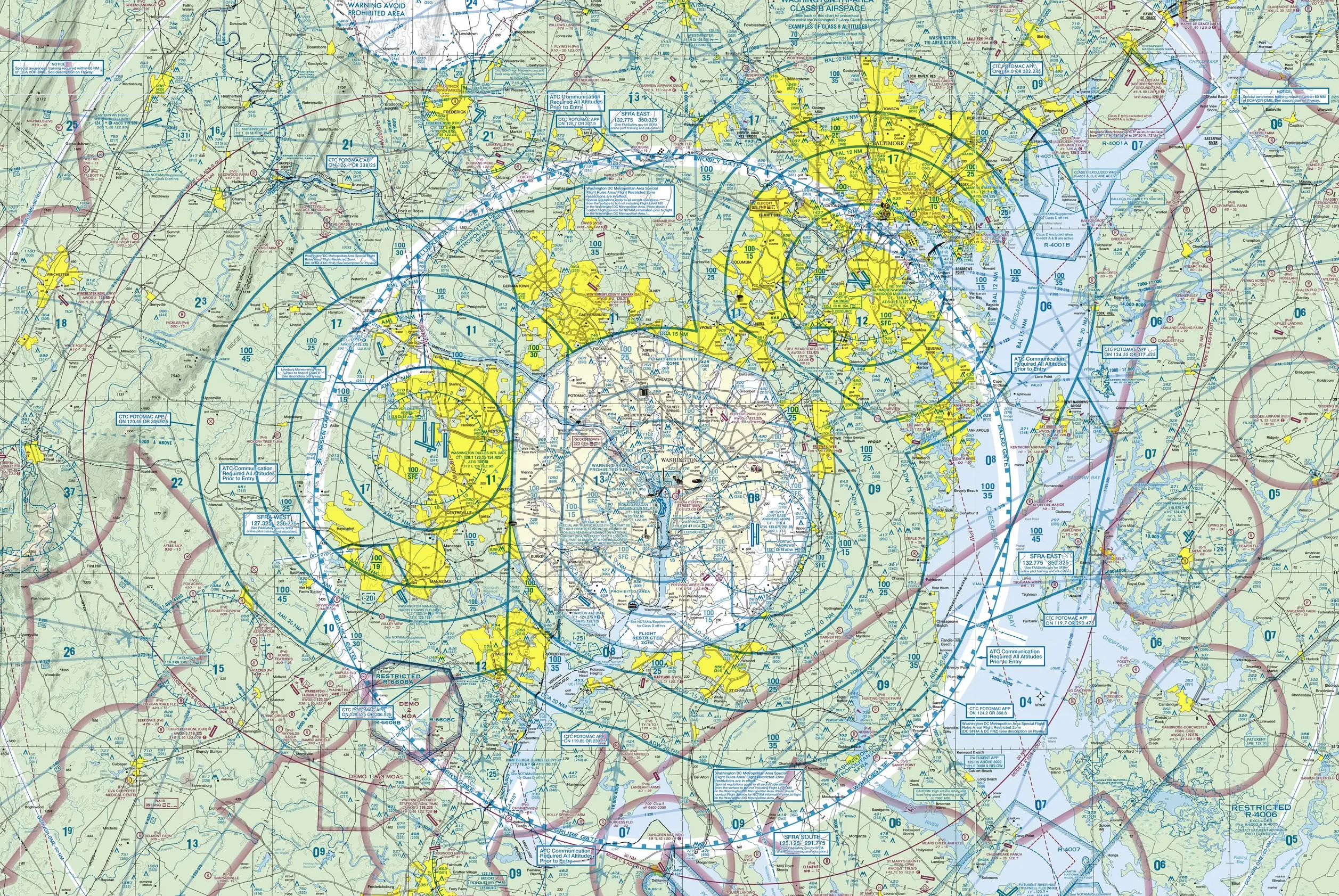
None of the below substitutes for the official SFRA training (you can find this on the FAA website, and in 14 CFR 93.339, "Requirements for operating in the DC SFRA") and current charts. A reader planning a flight in that airspace should work from current documentation and a local instructor. We are reporting how one pilot worked through it in the simulator, not publishing a procedure.
Chair Flying (in the sim)
Marcus is a real-world general-aviation pilot who uses his simulator to rehearse routes, review avionics, and reinforce habits before flying them in the airplane.
This session paired him with Jordan Gottfried (CFI, CFII, MEI). The plan was a simulated round-trip from the Washington SFRA toward western Maryland, including an arrival near rising terrain. The leg would be a chance to think through the Washington SFRA and the approach into a field tucked up against rising ground. A lot of the session focused on airmanship fundamentals, with one "division-of-attention" lesson Marcus kept coming back to.
The SFRA is the Washington, D.C. Special Flight Rules Area, a ring of special procedures around the capital. A pilot operating VFR through it files and uses published gates to enter and leave.
Reading the Route Before You Fly It
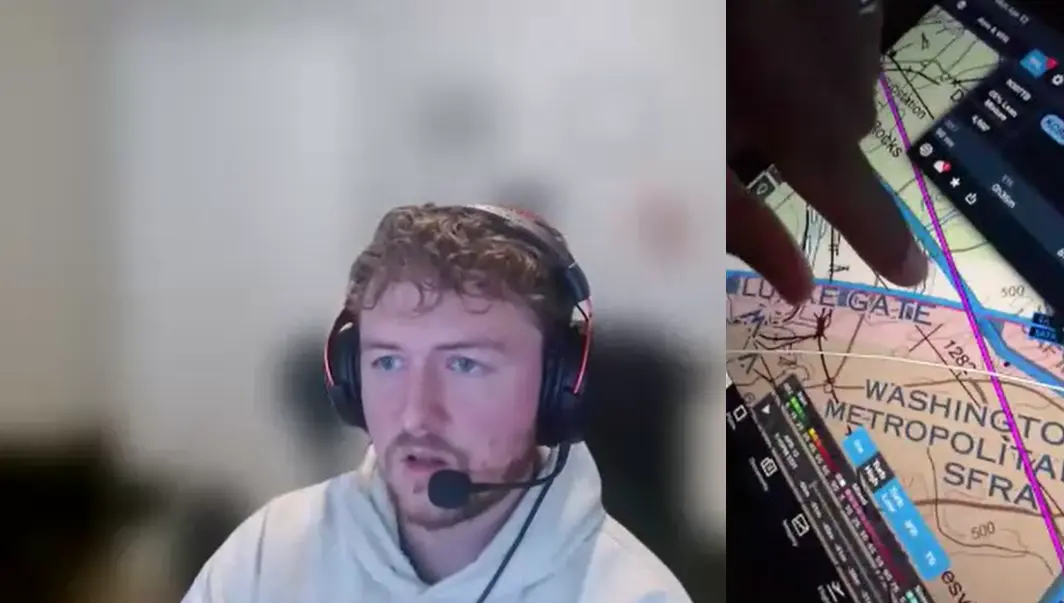
Marcus came in with a question he had been chewing on. When he looked at suggested routes in ForeFlight, the outbound leg offered a tidy direct routing, while the reverse leg seemed to wander. He wanted to know the rationale.
A route that appears in the planning software is not automatically an assigned or approved route. Those are suggestions drawn from what other pilots have filed. A clean direct line in one direction and a meandering one in the other often says more about traffic flow and habit than a "rule."
From there the two talked through the geometry of getting in and out of the area. The idea was to spend no more time inside it than necessary, and avoid clipping the shelves of the surrounding Class B airspace near the big terminals.
Marcus also wanted to know whether the arrival would force him onto a particular approach. You usually do not lock in the approach or the landing runway during planning. Especially on a longer flight, you will often not know the exact active runway until you are close enough to pull the current weather. On a leg that runs close to an hour, the field can be using a different runway by the time you arrive. Plan the en route portion now, and let the arrival resolve itself once you have the information.
FSC Pro
Read the full session report
The complete report, the session library, and every guide are part of FSC Pro.
Continue on FSC ProBased on a real Flight Sim Coach coaching session, used with the client's consent. The client's name has been changed.