
Session Report
A Simmer's Q&A Session on Non-Precision Approaches
One VOR approach, taken apart on the ground in a long chart Q&A, then flown in the sim.

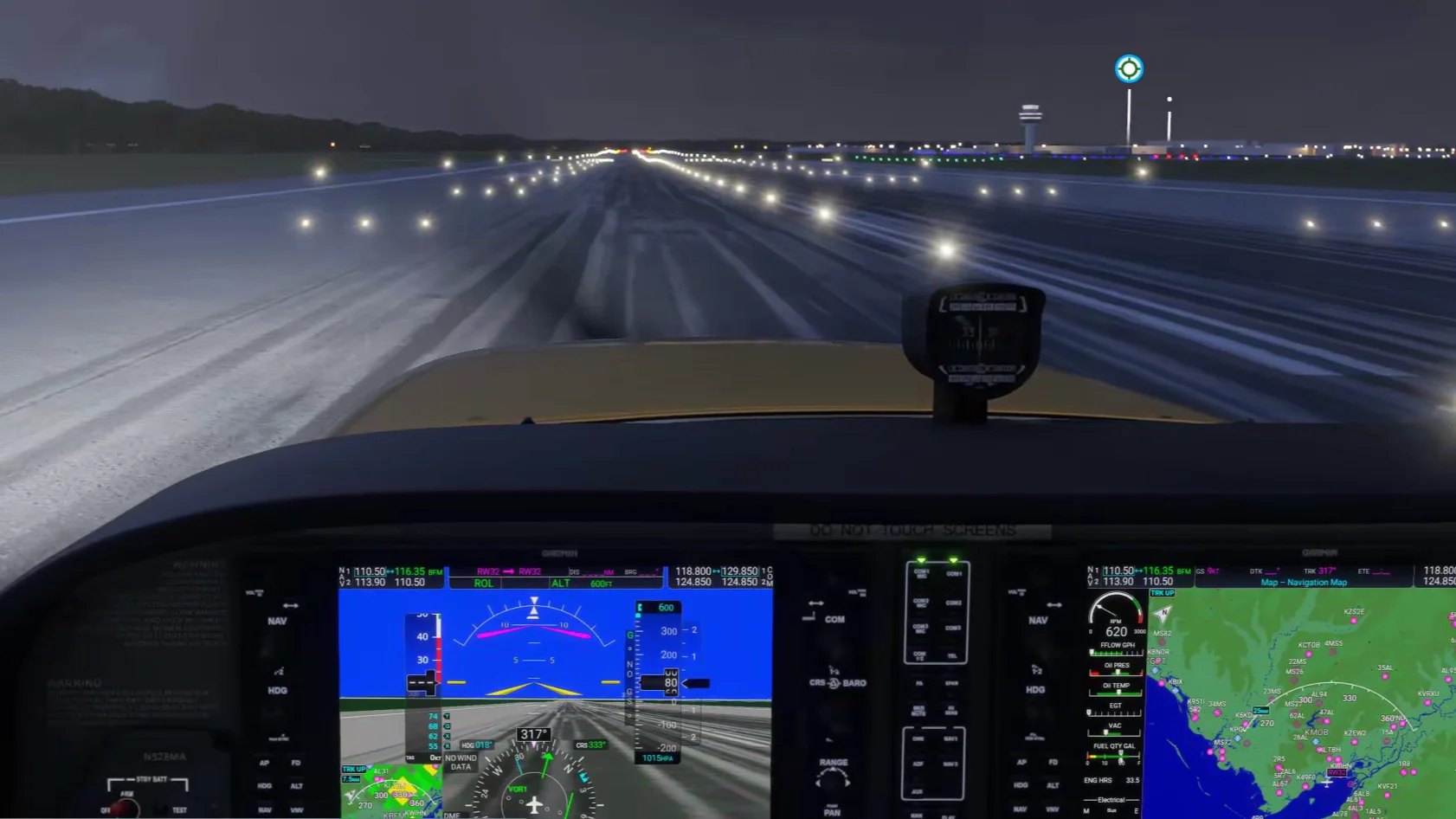
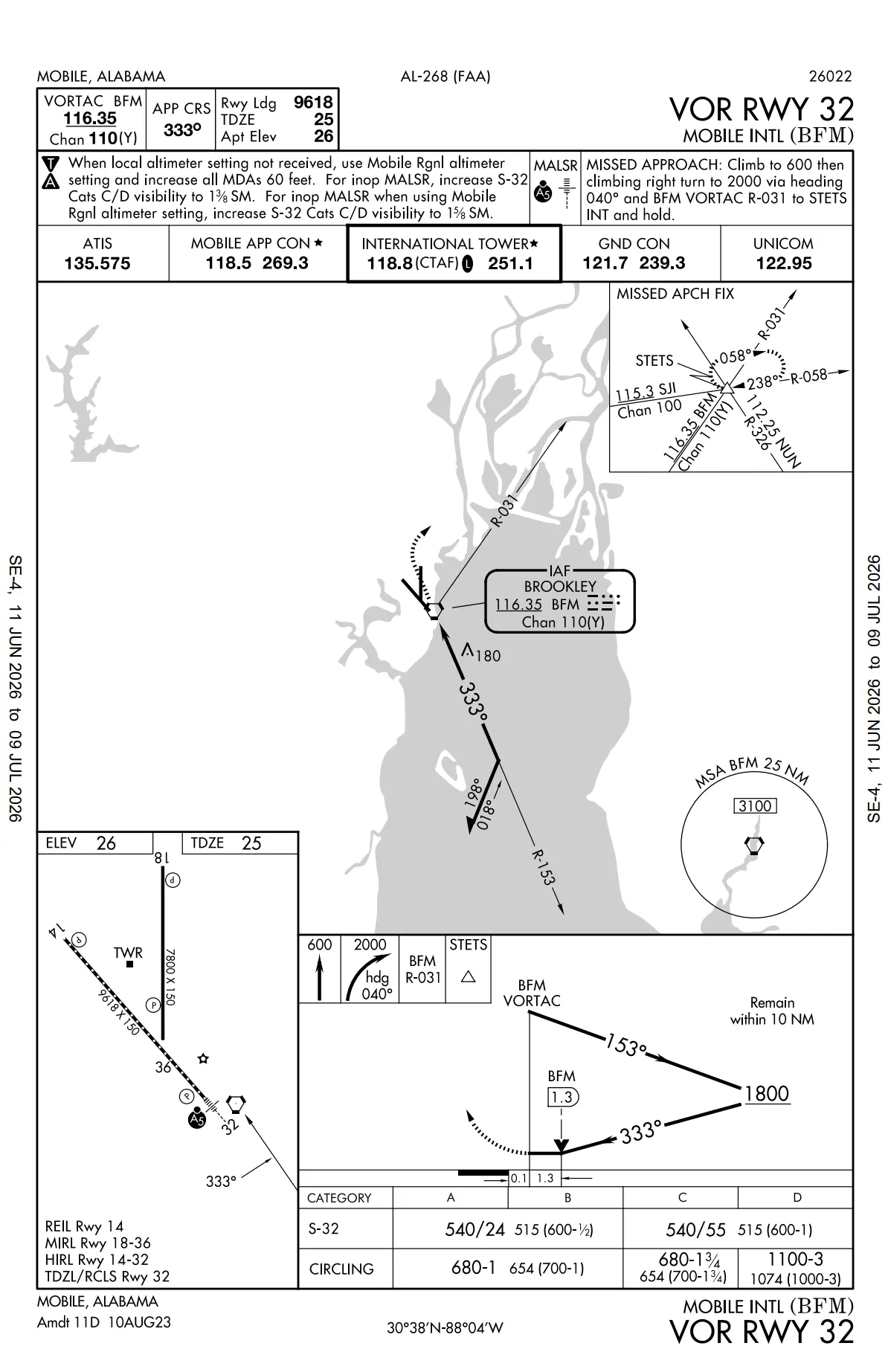
A note before you read on: the numbers in this report pertain to the specific VOR approach used for this lesson. They are teaching examples, not numbers to fly. For your own flying, real or simulated, always work from the current official chart for the approach you intend to use, and from the POH and avionics guide for your own aircraft. The student in this session flew a Cessna 172 with the G1000 in Microsoft Flight Simulator.
A Methodical Student
Raymond is a flight sim enthusiast working his way through instrument procedures in a Cessna 172S on Microsoft Flight Simulator. He flies the G1000 version of the airplane and comes to each session having done his homework. He often arrives with a written list of questions built up from his own study between lessons.
He has no real-world flight time, but his interest is in understanding instrument flying well enough to fly it correctly and confidently in the sim.
His instructor for this session was Nick Marcantonio (CFI, CFII, MEI), an FAA flight instructor since 2015 and a SAFE Master CFI. As an active airline pilot, several times in the session he compared how a two-pilot airline crew handles a procedure with how a single pilot handles the same situation in a Cessna.
The session started with an extended question-and-answer period built around a VOR approach chart. Then it moved into the simulator so Raymond could fly the full approach down to landing.
Inside this report
- Nick's guidance on stabilized approaches, visual descent points, circling, and missed-approach decisions
- A 13½-minute video of the complete VOR Runway 32 approach, from the procedure turn through landing
We'll recap the ground discussion first, then the flight.
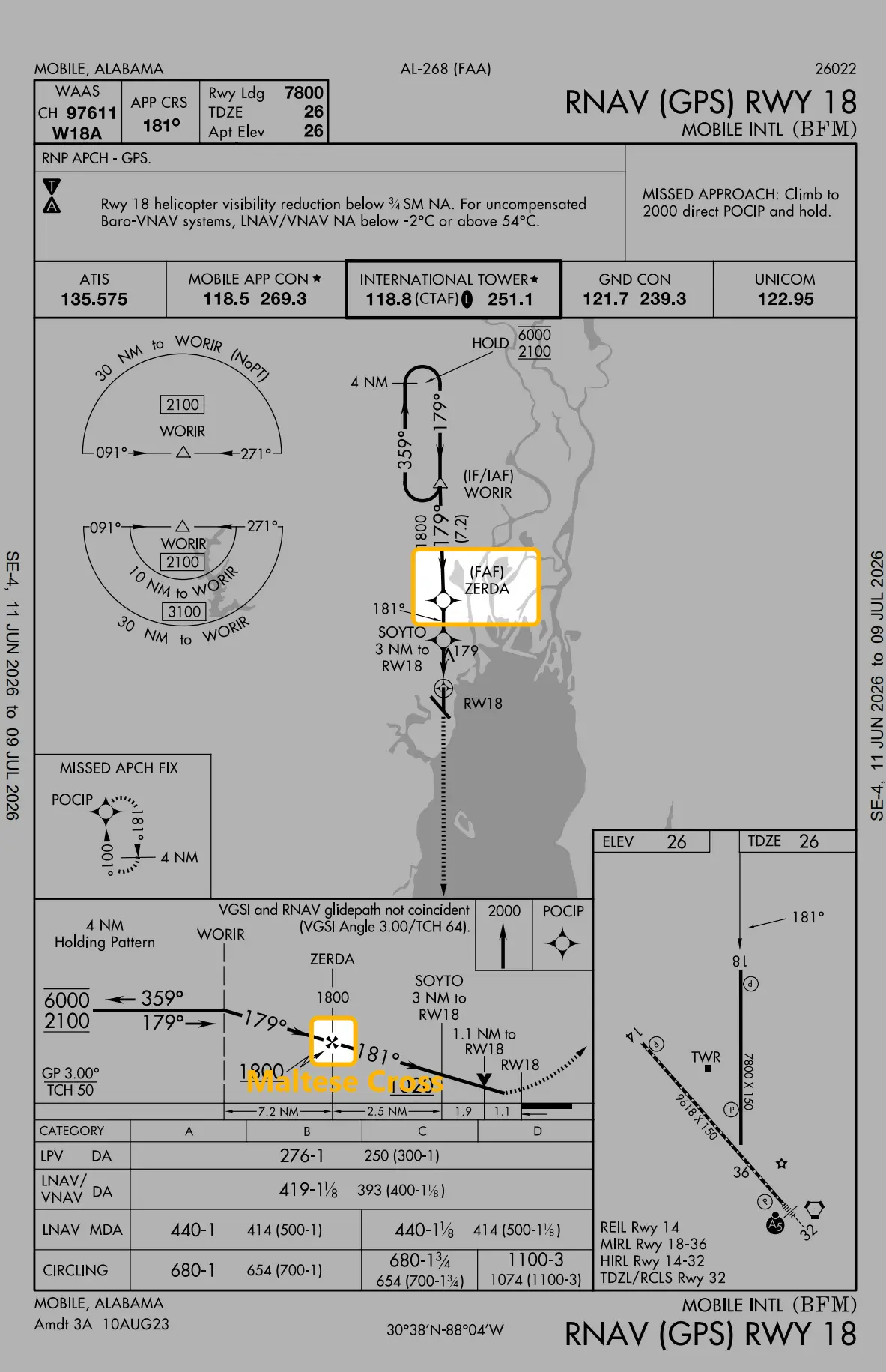
The approach used throughout the lesson is the VOR Runway 32 at Mobile International:
Two Things That Sound Like One: The Approach Button and Activating the Approach
Raymond's first question: is pressing the approach button on the autopilot what triggers the missed approach once he flies past the missed approach point?
The question arises because "approach" refers to two distinct actions.
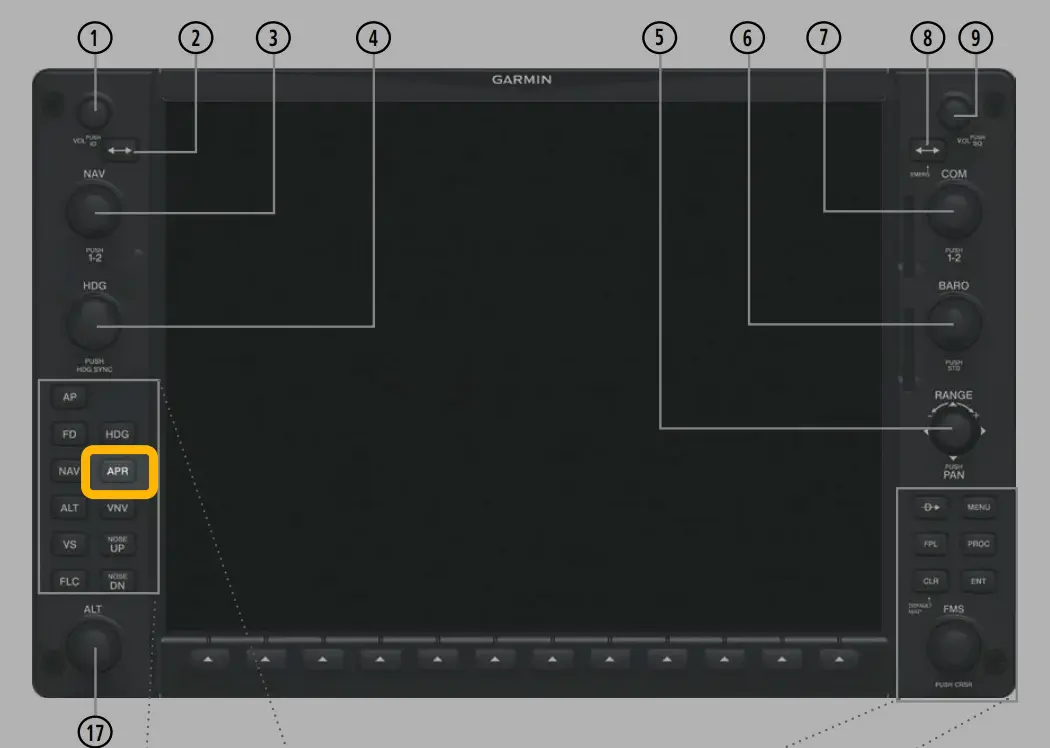
One is the APR button on the autopilot. Pressing it arms the lateral guidance, the side-to-side steering that keeps you on the final approach course. It also arms the vertical guidance, the glideslope or glidepath that brings you down. When you are cleared for an approach, you are cleared to join the final approach course and, once established on a published segment, to descend along its published altitudes. The approach button simply lets the autopilot do both of those for you.
On a non-precision approach like the VOR they were studying, there is no electronic glidepath to follow. The vertical guidance the button arms has nothing to capture, and you fly the descent down to the minimums yourself.
The other is activating the approach in the GPS flight plan. That is a separate step, done in the GPS itself, and it is what sequences the missed approach.
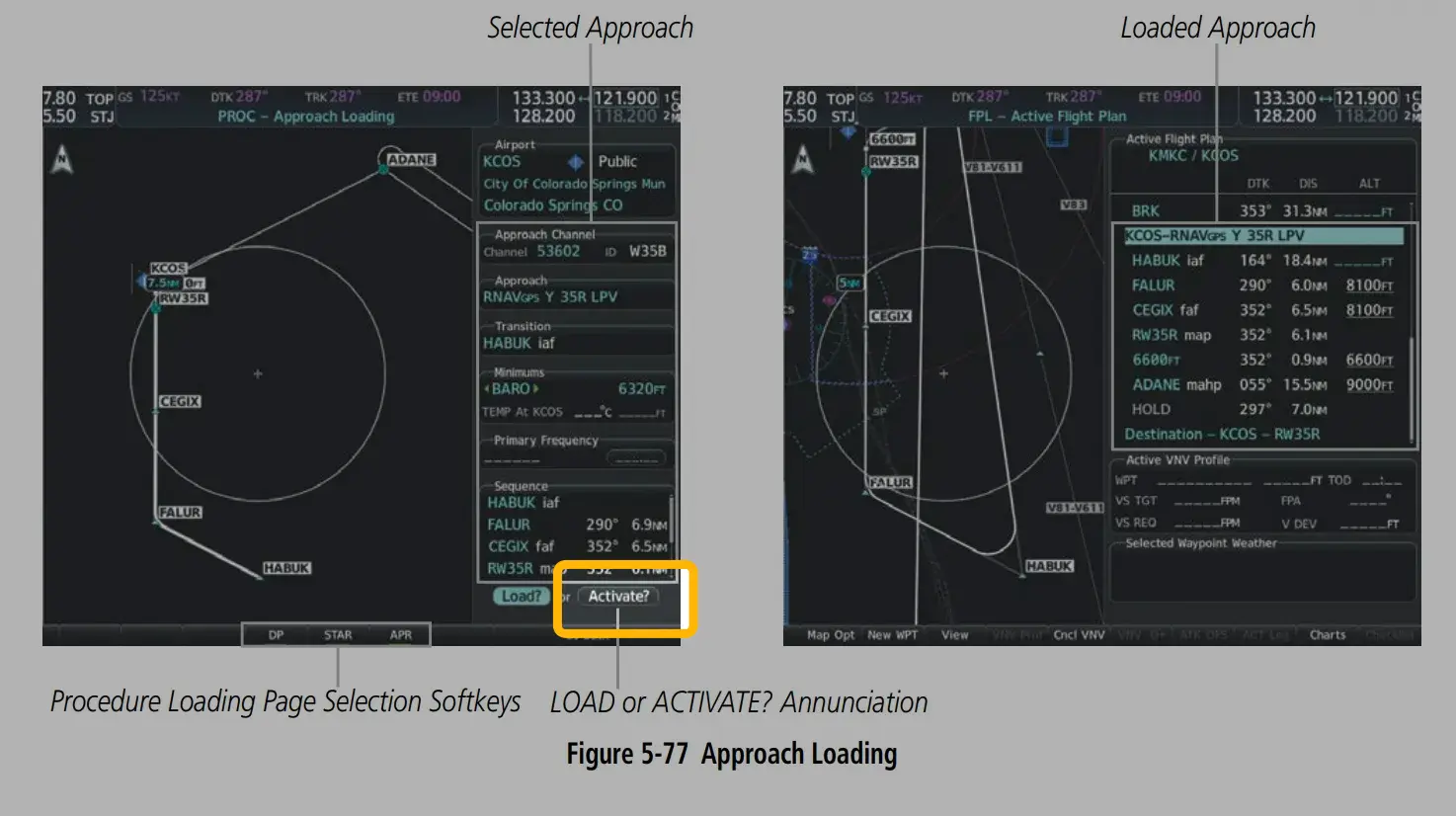
Activating the approach loads the published missed approach into your flight plan, ready at the missed approach point. When you get there, the GPS pauses and waits for you to trigger it with the go-around button or the SUSP softkey, so it never turns on its own. Pressing the autopilot's approach button does none of that. It's a GPS feature.
In practice: arm approach mode on the autopilot when you receive your approach clearance. Initiate the missed approach separately in the GPS.
The Stable Approach and the Final Approach Fix
Raymond's next question blended two different ideas: a stable approach and the final approach fix.
The first is the stable approach, which the FAA's Airplane Flying Handbook defines:
FAA Airplane Flying Handbook (FAA-H-8083-3), Chapter 9 (faa.gov)
"A stabilized approach is one in which the pilot establishes and maintains a constant-angle glide path towards a predetermined point on the landing runway."
"If the approach is too high or too low, it may not be possible to establish a stabilized approach, and the pilot should execute a go-around. Typically, pilots go-around if unable to establish a stabilized approach by 500 ft above airport elevation in visual meteorological conditions (VMC) or 1,000 ft above airport elevation in instrument conditions (IMC). For a typical GA piston aircraft in a traffic pattern, an immediate go-around should be initiated if the approach becomes unstabilized below 300 ft AGL."
For instrument flying the altitude he's most concerned with is 1,000 feet AGL. Nick's reasoning for it is practical. Even at a modest 90 knots, 1,000 feet above the ground puts you roughly two minutes from touchdown. If the airplane is not configured and your speed is not under control that close in, you are not in a safe place to keep going. The prudent move is to go around, then ask for vectors and try again.
He compared that with airline practice, where it is a hard rule, rather than a judgment call. There, a crew is required to go around if the approach is not stable at 1,000 feet.
The final approach fix is a different thing entirely.
On most approaches it is a charted point, marked by a Maltese cross and usually around five miles from the airport. Not every approach has one, though, as Raymond would see when he flew this one.
Reading the Lights
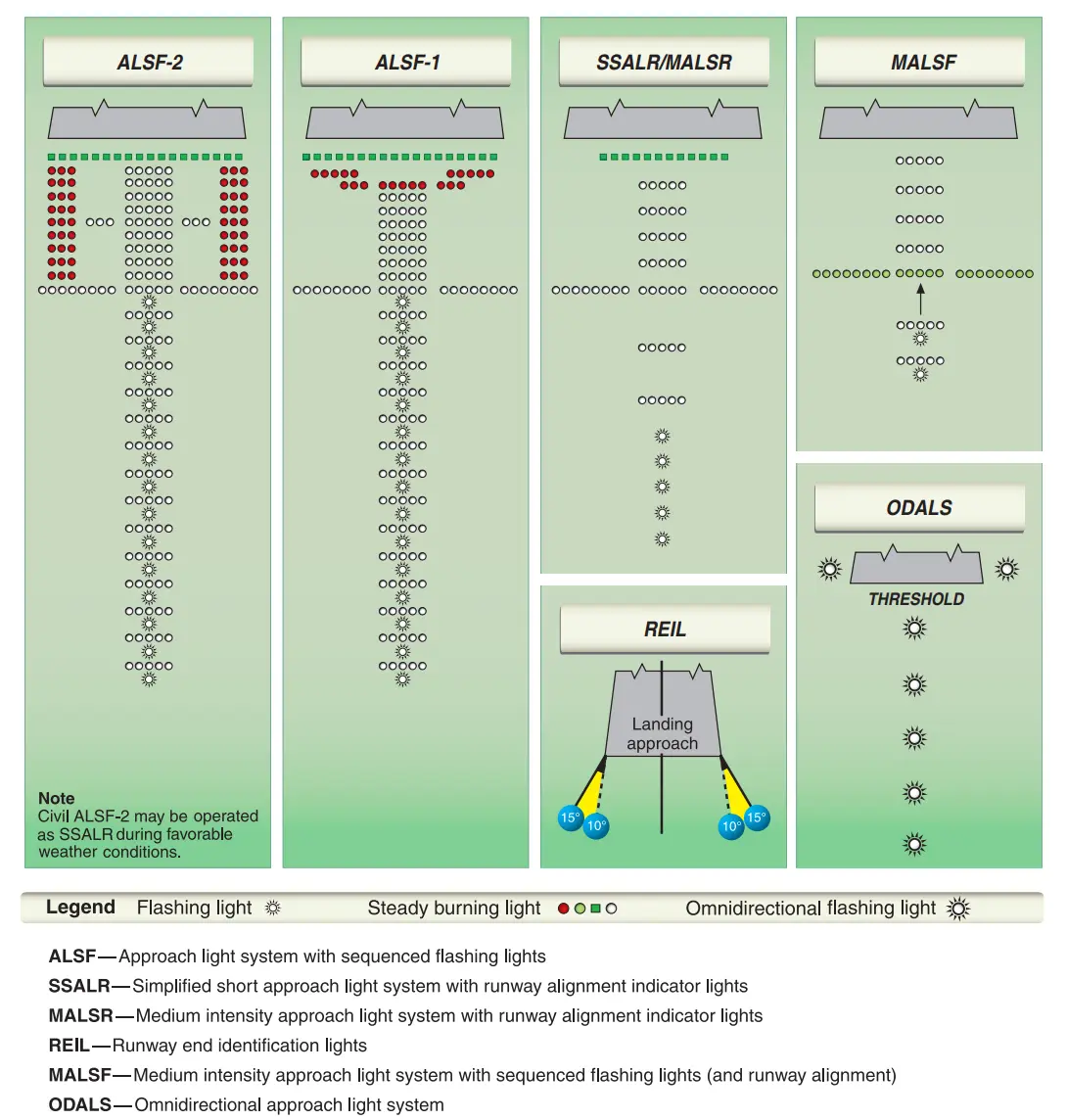
The chart showed an approach lighting system, and Raymond wanted to know what the pieces meant. The practical points matter more than the alphabet soup of names.
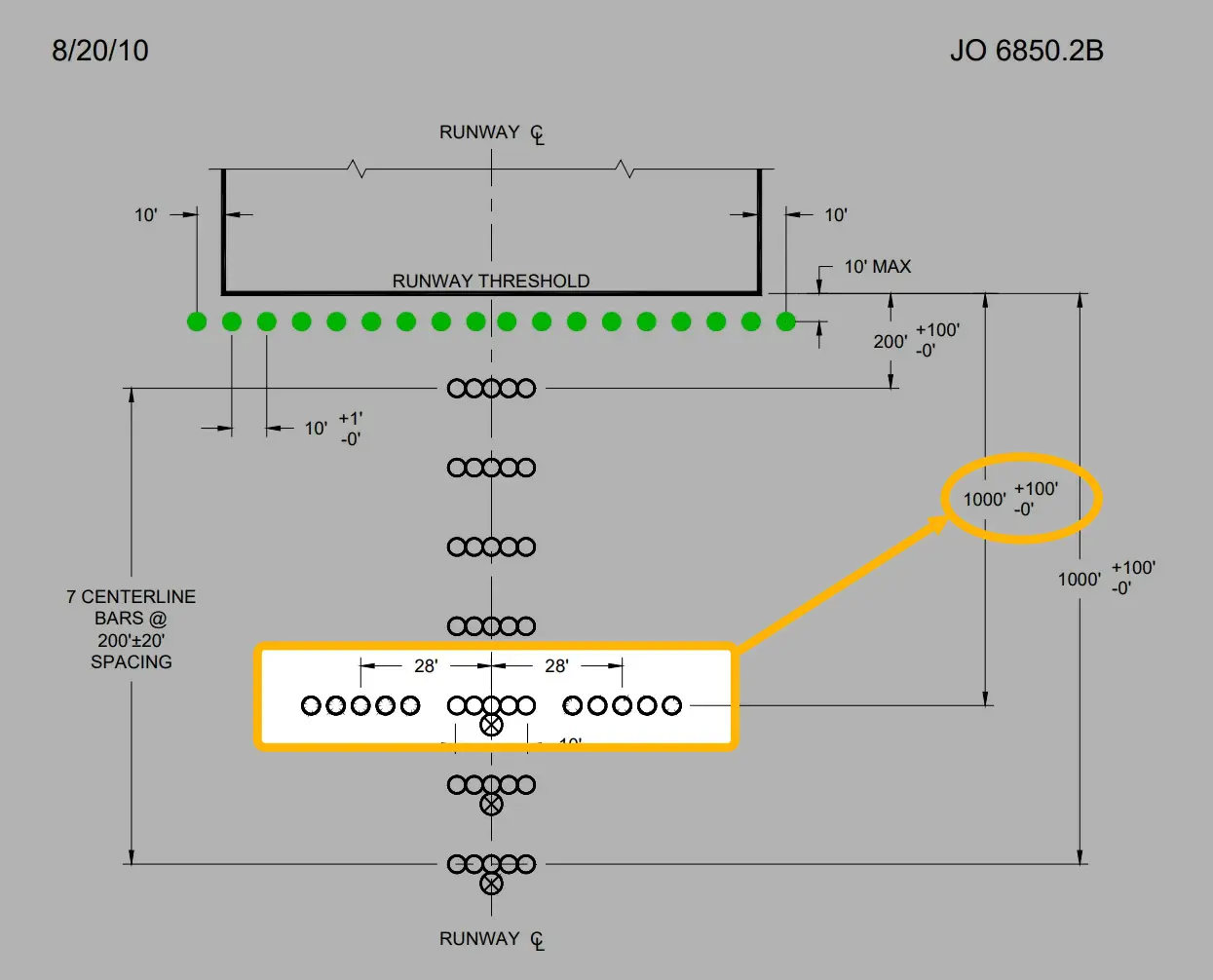
The wide bar of lights sits 1,000 feet from the runway, and you can use it to judge visibility.
With the approach lights in sight, the required flight visibility, and a normal path to the runway, you can continue a bit further below the published minimums.
Specifically, as long as those three conditions continue (including the flight visibility), the approach lights can allow you to descend to 100 feet above the touchdown zone elevation. Below 100 feet you need the red terminating bars or red side-row bars, the runway environment itself, or another of the references the regulations allow (we'll discuss further later in the report).
That said, it's important to not fall into the trap of thinking that seeing the approach lights means you have the required flight visibility. You can read more about the subtleties of this in Jeff Van West's article called "Looking for the Lights". His Approach Lighting Systems video also walks through the different lighting configurations.
FSC Pro
Read the full session report
The complete report, the session library, and every guide are part of FSC Pro.
Continue on FSC ProBased on a real Flight Sim Coach coaching session, used with the client's consent. The client's name has been changed.